

Blended Finance Can Turn Indonesia’s Solar Ambition into Bankable Projects
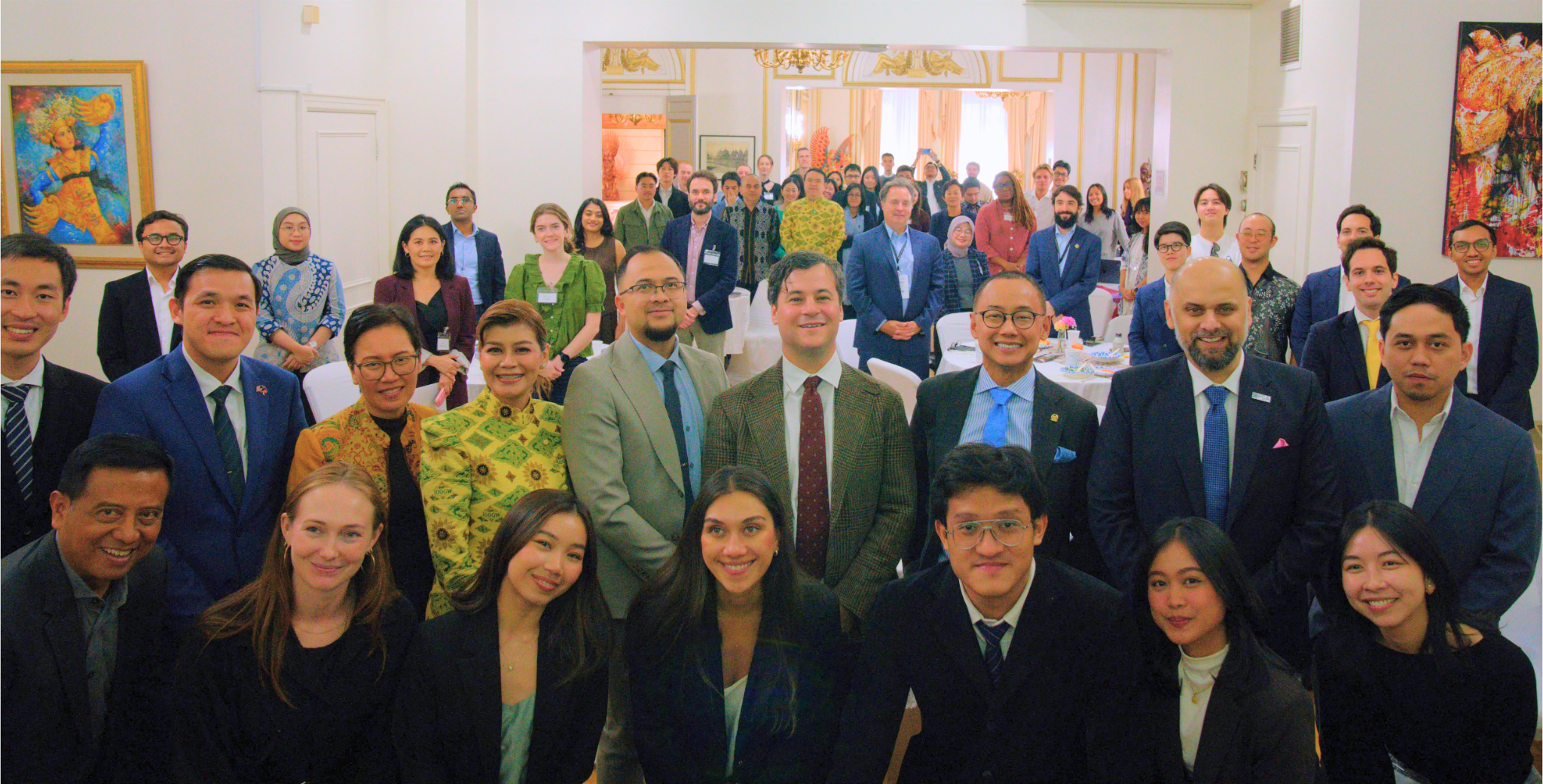
Group photo of the speakers, moderator, representative of the Consulate General of Indonesia in New York, and participants at the Indonesia Solar Investment Forum, held on September 24, 2026.
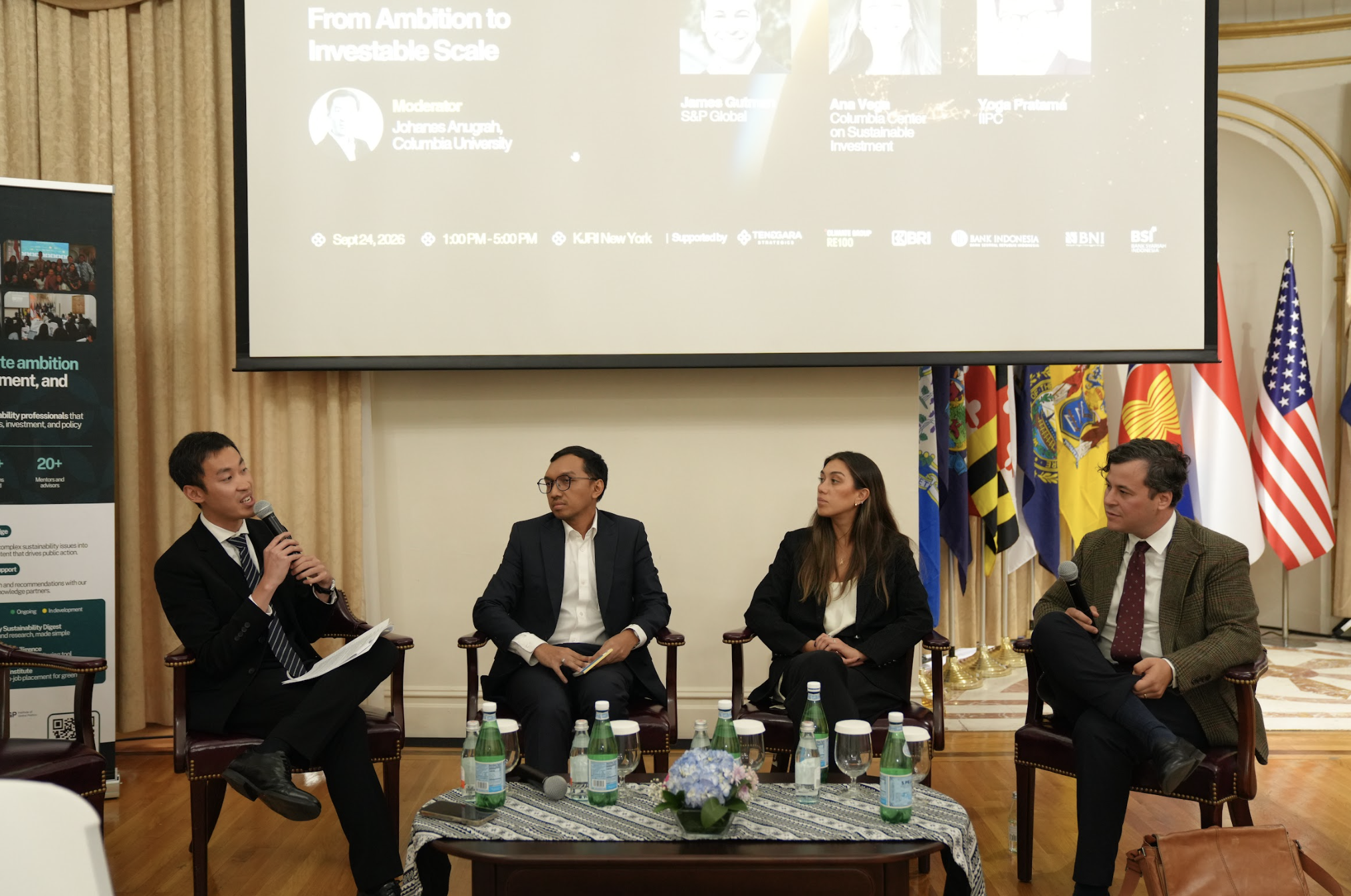
James Gutman, Senior Analyst at S&P Global. Ana Maria Camelo Vega of CCSI. and Yoga Adhi Pratama, IIPC New York at the Session 2 of Indonesia Solar Investment Forum
Held at the Consulate General of the Republic of Indonesia in New York, the forum examined the conditions needed to move ambition to investable scale. The financing discussion brought together complementary perspectives from Ana M. Camelo Vega of the Columbia Center on Sustainable Investment (CCSI) and James Gutman, Senior Analyst at S&P Global, connecting institutional and governance requirements with the commercial factors shaping investment decisions.
"Blended finance only works when it is used with discipline. Concessional money should go where it actually changes the investment decision, and we can only know that if deal terms and results are made public. In Indonesia, there is a more basic issue too. Solar is still competing with coal, which benefits from regulatory support, and blending alone cannot fix that. Public finance can help close the gap, but policy has to point in the same direction," said Ana Maria Camelo Vega of CCSI.
Indonesia’s proposed solar portfolio presents opportunities across generation, battery storage, transmission and supporting infrastructure. Bringing those opportunities to market requires a clear project pipeline, credible business plans and commercial arrangements that investors can assess. The discussion explored how blended finance could support that process by combining capital with different risk and return requirements.
Concessional finance, guarantees and credit-enhancement mechanisms were considered as potential tools for addressing financing barriers. Their usefulness, however, depends on the circumstances of each project. The discussion focused on how these instruments could encourage private participation while maintaining clear responsibilities among project sponsors, public institutions and financing partners.
Ana Camelo Vega addressed the policy, regulatory and governance conditions needed to develop an investable pipeline. Her session examined consistent project-readiness standards, transparent procurement and the evidence needed to assess whether blended-finance interventions generate additional investment and development value.
Ana M. Camelo Vega’s perspective connected the design of financial support with the quality of project preparation. For a portfolio spanning different locations, project sizes and ownership models, a consistent assessment process can help clarify which opportunities are ready for investment and which require further technical, institutional or commercial work.
James Gutman, Senior Analyst at S&P Global, highlighted that Indonesia already has many of the fundamental ingredients needed to scale solar energy, including abundant solar resources, available land, a growing electricity market, financing, and an expanding solar technology ecosystem. He noted that the next challenge is translating these fundamentals into bankable projects while addressing structural barriers across land acquisition, energy subsidies, market segmentation, and the domestic solar supply chain.
“However, turning this potential into bankable projects requires addressing critical systemic barriers: land acquisition challenges, shifting away from heavy diesel subsidies, and balancing deployment across residential, C&I, and utility-scale markets. Crucially, the country must also strengthen its position in the global supply chain by moving beyond raw silica exports to domestic polysilicon processing,” said James Gutman, Senior Analyst at S&P Global.
The wider panel examined foreign-exchange and offtaker risks alongside guarantees and risk-sharing arrangements. For developers, the practical implication was to identify financing constraints early and explain how proposed support would address them. For public institutions and development partners, it was to connect financial instruments with measurable preparation needs and a clear rationale for intervention.
Together, these perspectives highlighted a pathway toward bankability: prepare projects thoroughly, make their economics and risks transparent, and direct financial support toward the constraints that prevent commercial participation.
The Indonesia Solar Investment Forum 2026 was organized by SANARA, AESI and Tenggara Strategics together with IIPC New York and the Consulate General of the Republic of Indonesia in New York. Its two-panel program examined emerging-market solar deployment, project readiness, financing and international collaboration.
------------------ END ------------
About SANARA
SANARA (Sustainability Network of Nusantara) is a global network connecting Indonesian sustainability stakeholders with international partners, investors, and institutions to advance Indonesia’s sustainable development and climate agenda. SANARA facilitates dialogue, knowledge exchange, and strategic collaboration across the public, private, and international sectors, with a focus on translating Indonesia’s sustainability priorities into meaningful partnerships and investment opportunities.
About AESI
The Indonesia Solar Energy Association (AESI) is an industry association representing solar energy sector stakeholders across Indonesia. AESI works to accelerate the development and adoption of solar energy through policy advocacy, industry collaboration, market growth, and the deployment of solar power across utility-scale, commercial, and rooftop segments. Through engagement with government, industry, investors, and other stakeholders, AESI supports the development of a competitive and sustainable solar energy ecosystem in Indonesia. As Indonesia accelerates its renewable energy transition, AESI members are at the forefront in shaping policy, building partnerships, and growing their businesses.
About IIPC New York
The Indonesia Investment Promotion Center (IIPC) New York office is the official representative of the Indonesian Ministry of Investment and Downstream Industry / Indonesia Investment Coordinating Board (BKPM) covering the American continent (North America, USA, Central America, Latin America, and the Caribbean). BKPM develops strategies to improve an end-to-end service for investors. The team will assist investors from exploring business opportunities in Indonesia, obtaining investment licenses and incentives, and carrying out the construction stage to finishing the commercial operation stage. As the main link between business and government, the ministry is responsible for creating a conducive investment climate in Indonesia.
For further information, please contact:
AESI
Antonia Junita
PR & Communications
comms@aesi.or.id
Denaya Karenzi
Sanara Indonesia
+1 929-714-4148
email us here
Visit us on social media:
LinkedIn
Instagram
Legal Disclaimer:
EIN Presswire provides this news content "as is" without warranty of any kind. We do not accept any responsibility or liability for the accuracy, content, images, videos, licenses, completeness, legality, or reliability of the information contained in this article. If you have any complaints or copyright issues related to this article, kindly contact the author above.
